Foot and ankle pain can change the way you walk, stand and move through your day. A rolled ankle, a sore heel in the morning or achy arches can all make simple steps feel hard. At HealthSource Chiropractic of Roseland, Dr. Jenna Patel, D.C., looks for the source of the problem, not only the spot that hurts.
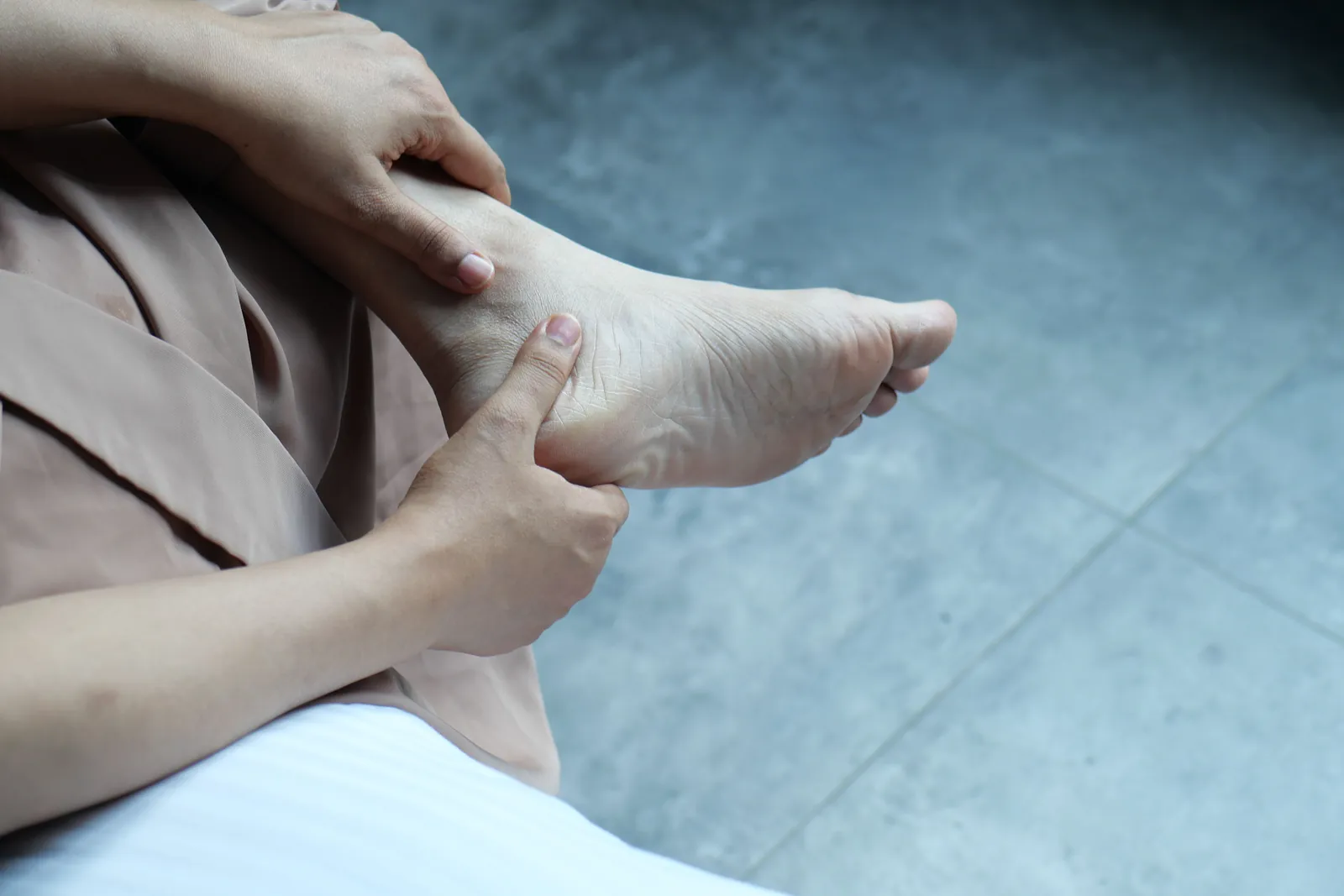
Common causes of foot and ankle pain
Several everyday problems can lead to sore feet and ankles:
- Ankle sprains, often from a misstep on a curb, a trail or the court
- Plantar heel pain, which tends to feel worst with the first steps in the morning
- Flat feet or low arches that may add strain to the feet, knees and hips
- Overuse aches from running, long walks or standing for hours
Plantar heel pain often involves the plantar fascia, a thick band of tissue under the foot. MedlinePlus explains this in its guide to plantar fasciitis. Flat feet do not always cause trouble. However, when they do, the strain may show up higher in the leg. You can read more about that on our hip and knee pain page. If you hurt your ankle during a game or a run, our sports injury treatment page talks about getting back to your sport.
How Dr. Patel evaluates your feet and ankles
Every plan starts with an evaluation. First, Dr. Patel asks when the pain started, what makes it better or worse and which activities matter to you. Next, she checks your posture, mobility and pain. She has extra training in movement analysis and sports injury rehab, so she may also look at how you stand and walk.
Dr. Patel looks at your feet as part of a chain that runs up through the knees, hips and lower back. In other words, the strain does not always start in the foot or ankle itself. We take X-rays on site only when your exam shows a clinical need. Then she explains her findings and a personalized care plan before any care starts.
Care options for foot and ankle pain
Depending on your exam, care for foot and ankle pain may include:
- Hands-on adjustments that may help stiff joints in the foot and ankle move better
- Soft tissue work, including instrument-assisted techniques, for tight calves and arches
- Kinesiology taping, which may give the ankle or arch extra support during activity
- Orthotic care, if the shape of your feet plays a part in the problem
- Class IV laser therapy, if Dr. Patel thinks it suits your case
- Guided exercises to build strength, balance and control
We see taping and orthotic care as support tools, so we pair them with exercise and hands-on care. Our laser therapy page explains what a session is like.
Exercise and everyday habits
Exercise is a key part of care for many foot and ankle problems. After a sprain, for example, balance drills may help your ankle react faster on uneven ground. For heel pain, calf and arch stretches may be part of the plan. Dr. Patel walks you through each exercise, so you know how to do it at home.
A sudden jump in activity, like a long hike after weeks at a desk, can strain your feet. So we may also talk about pacing, footwear and rest days that fit your routine.
When to get imaging or see a podiatrist
Some cases of foot and ankle pain need a medical doctor first. Go to the ER or call your doctor right away if you notice any of these signs:
- You cannot put any weight on the foot or take a few steps
- A bone or joint looks out of place
- Pain, swelling and warmth in the calf, which can signal a blood clot
- Redness, heat or fever, which may point to an infection
- New numbness, tingling or weakness in the foot
- A wound or color change on the foot if you have diabetes
Imaging may also make sense when bone pain stays in one spot or swelling does not settle. If we think you need a different scan or a medical opinion, we will tell you so. A podiatrist is a doctor who focuses on the foot and ankle. You may want to see one for a suspected fracture, an ingrown nail or a foot wound. The same goes for problems that keep coming back. For more background, MedlinePlus has clear pages on ankle injuries and disorders and flat feet. This page is for education only and is not a diagnosis.
Getting help for foot and ankle pain in Roseland
Chiropractic care is not the right fit for every foot problem, and we will tell you if yours is one of them. Dr. Patel evaluates each case and explains your options in plain language, so you can decide what feels right. She speaks English, Hindi and Gujarati, so you can ask questions in any of them.
Our office is at 12 Eisenhower Parkway, Suite 1, in the Downtowne At Roseland complex. Ask about our new-patient visit: consultation, exam and X-rays if clinically needed. The offer is for new patients only. It does not apply to Medicare, Medicaid, other federal healthcare program patients or ACN members.
When foot and ankle pain keeps you from your usual walks or workouts, you can book online or call us at (973) 200-2424.