Spinal decompression is a non-surgical table treatment that may help some kinds of disc and nerve related pain. Here at HealthSource Chiropractic of Roseland, Dr. Jenna Patel, D.C., always evaluates you first. That way, you know if it fits your problem before any care starts.
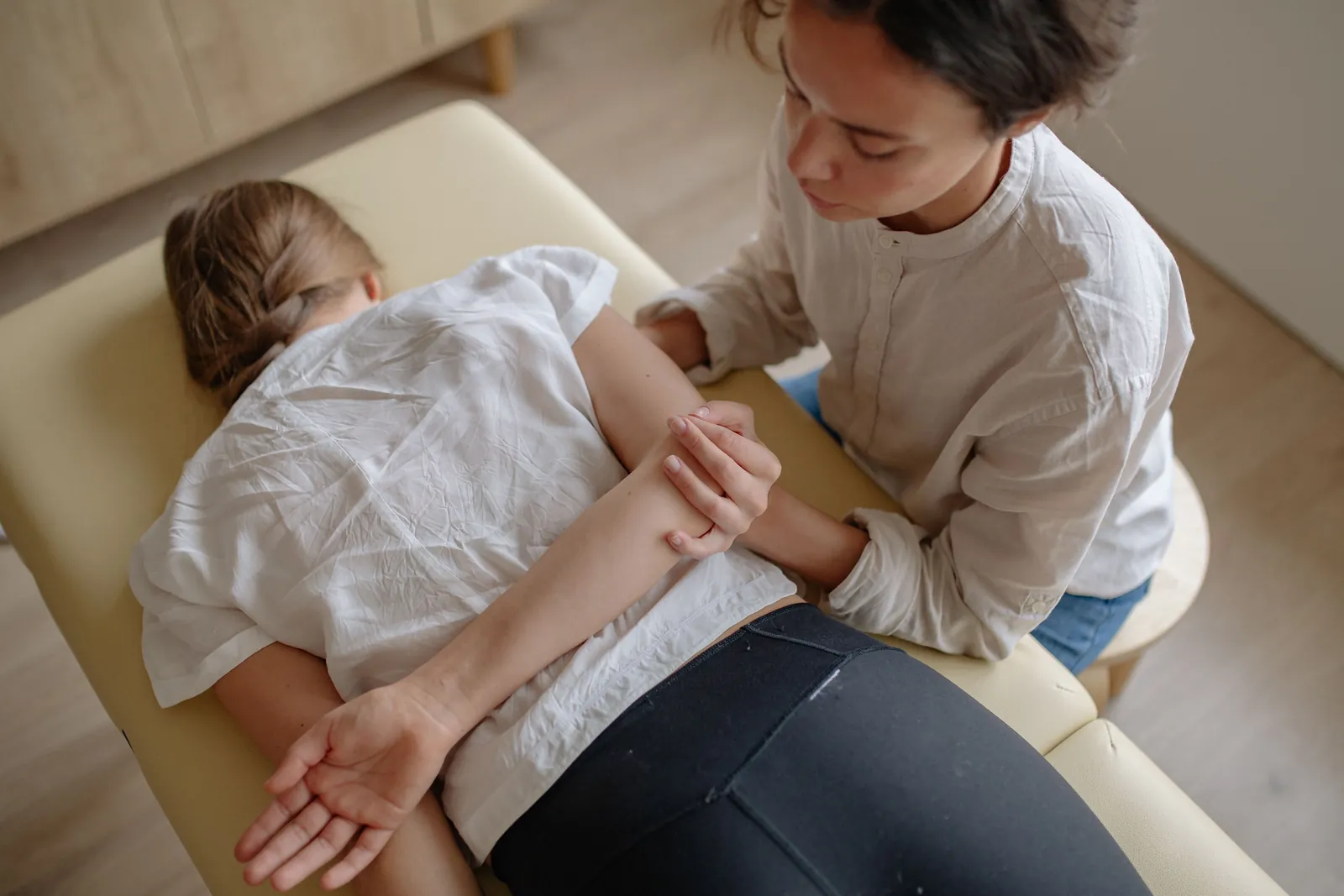
Below, we explain how the table works and who may be a candidate. We also cover who should not use it, what sessions are like, and what the research does and does not show.
How spinal decompression works
Your spine has small, cushioned discs between the bones. When a disc bulges, it may press on a nearby nerve. As a result, you may feel pain in your back, or pain that travels down your leg.
Spinal decompression uses a padded table to apply a slow, controlled pull to the spine. The goal is to ease pressure on the discs and give nearby nerves a little more room. Most tables pull and then relax in cycles, not in one long, steady stretch. Nothing goes inside your body, so there are no needles or incisions. You may also hear it called non-surgical decompression.
Who may be a candidate for spinal decompression
Decompression is one option for pain that seems to come from a disc or a pinched nerve. Dr. Patel decides only after a consultation and exam. In general, it may help some people with:
- Bulging discs in the lower back
- Sciatica, the leg pain we cover on our sciatica relief page
- Ongoing low back pain linked to disc changes
- Nerve related tingling that travels from the back into a leg
For back pain without a disc problem, other care such as adjustments or exercise may fit better. You can read more on our back pain relief page.
Who should not use decompression
Decompression is not safe or right for everyone. That is why your health history and exam come first. Most providers avoid this kind of table care for people who:
- Are pregnant
- Have a recent spinal fracture or severe bone loss
- Had back surgery with metal implants
- Show signs of a spinal tumor or infection
Dr. Patel reviews your history for these and other concerns. If decompression is not a good fit, she tells you and talks through other options. Some problems need a medical doctor instead of a chiropractor.
Go to the ER or see a medical doctor right away if you have loss of bladder or bowel control. The same goes for numbness in the groin or inner thighs, or leg weakness that gets worse. Back pain with a fever, or after a serious fall or crash, also needs medical care first.
What spinal decompression sessions are like
Every plan starts with your first visit. You fill out a health history, talk with Dr. Patel and have an exam of your posture, mobility and pain. We take X-rays only if they are clinically needed.
Next, Dr. Patel explains her findings and a personalized care plan before any care starts. If decompression is part of that plan, ask us to walk you through our table, since tables differ a little. On most of them, a session goes like this:
- You lie on a padded table, either on your back or on your stomach.
- Soft straps go around your hips and lower chest to keep you in place.
- The table then applies a slow pull, followed by a rest, in repeating cycles.
- At any point, you can tell us if something feels uncomfortable, and we adjust or stop.
Decompression is often one part of a wider plan. Based on your exam, Dr. Patel may combine it with adjustments, soft tissue work or exercise rehab. You are welcome to ask questions before you agree to anything.
Honest limits of the research
We want you to have clear expectations. Research on spinal decompression tables is limited, and study results have been mixed. For that reason, we never promise a result.
Along the way, we check how you are doing. If the care does not seem to help, we talk with you about other options, or a medical referral when that makes more sense. For a plain overview of drug-free options, see this NIH page on low back pain and complementary approaches. MedlinePlus also explains what a herniated disk is. This page is for education only and is not a diagnosis.
Insurance, financing and getting started
We accept most major insurance plans, but coverage for decompression can vary from plan to plan. Please call us to verify your plan before your visit. We also offer financing through Cherry and CareCredit, plus the APEX discount plan. You can find details on our insurance and financing page.
New to our office? Ask about our new-patient visit: consultation, exam and X-rays if clinically needed. The offer is for new patients only. It does not apply to Medicare, Medicaid, other federal healthcare program patients or ACN members.
You can find us at 12 Eisenhower Parkway, Suite 1, in Roseland. Book online or call (973) 200-2424. Dr. Patel speaks English, Hindi and Gujarati, so you can talk through your concerns in any of the three.