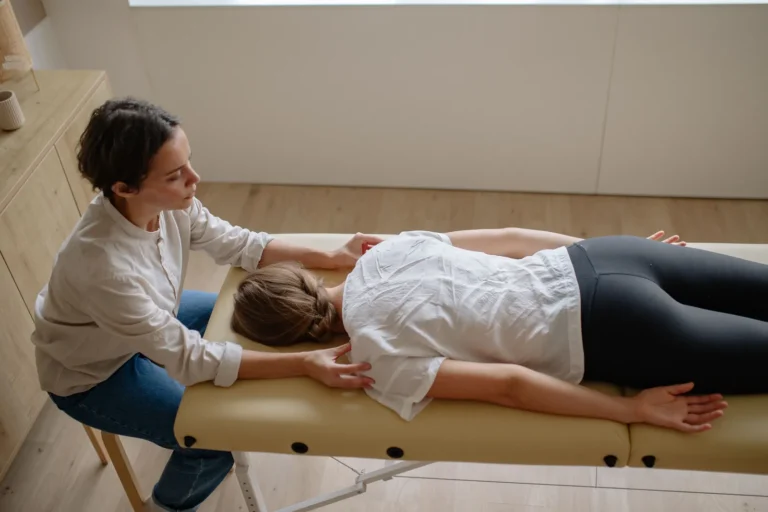
Tech neck is neck and shoulder strain that comes from looking down at a phone, tablet or laptop for long stretches. It often shows up as stiffness, soreness or sharp pain, and some people also get headaches. The main cause is how you hold your head and how long you hold it there. So small daily changes, such as raising your screen and changing position often, may ease it. Below, we cover the symptoms, the causes, helpful habits and warning signs. We also explain how Dr. Jenna Patel, D.C. looks for the source of the problem.

Common tech neck symptoms
This kind of strain usually builds slowly. Cleveland Clinic’s guides list signs like these:
- Soreness, stiffness or sharp pain in your neck and shoulders
- Tightness that spreads into your upper back
- Trouble turning your head or tilting it
- Headaches
- Numbness or tingling in an arm, hand or fingers from an irritated nerve
- Fatigue, partly because a hunched posture can limit how deeply you breathe
An ache between your shoulder blades can involve the muscles there, which our post on rhomboid pain covers. If your headaches seem to start at the back of your head, read about headaches at the base of the skull. Numbness, tingling or weakness in an arm needs a closer look, so check the warning signs below.
What causes tech neck?
Your head is heavy. Cleveland Clinic compares it to a bowling ball that weighs 10 to 12 pounds. Your neck carries that weight well when your head sits level over your shoulders. As you tip your head forward, though, the load grows.
Cleveland Clinic’s tech neck guide gives a sense of scale. For example, with a slight glance down, your head acts like a weight of about 27 pounds. At a 30 degree tilt, it feels closer to 40 pounds. When you dip your head toward a phone in your lap, the force may reach 60 pounds or more. However, these figures are estimates from a model, not measurements of your own neck. Still, they show why the angle matters.
In addition, rounded shoulders add to the load as you hunch toward a screen. Time also matters. A quick glance does little harm, so it is how long you stay bent forward that counts.
Is tech neck serious?
Often, it is a nagging problem rather than a dangerous one. Cleveland Clinic notes that most causes of neck pain improve in time, and you can often manage them at home. Still, ongoing strain over time can contribute to arthritis and disc wear in the neck, according to Cleveland Clinic. In addition, MedlinePlus says slouching can affect how well your joints move. The hopeful part is that the main cause is a habit, and habits can change.
Daily habits that may ease tech neck
You do not need to give up your phone. Instead, try these simple habits for tech neck, drawn from Cleveland Clinic and MedlinePlus:
- Raise the screen. Hold your phone or tablet closer to eye level, so you look straight ahead instead of tipping your chin down.
- Change position often. Cleveland Clinic notes that staying in one pose for more than 20 minutes can bring aches.
- Keep handheld sessions short. Aim for about 15 to 30 minutes at a time, then look up and move.
- Go hands-free on long calls. Set your phone on a stand at eye level, or use the speaker or headphones.
- Take short walks around your office or home to break up long sitting.
- Check your pillow. It should keep your head and neck in line with your body. Also, try not to sleep on your stomach with your head turned.
A desk setup that is kinder to your neck
Cleveland Clinic says straining to see a computer screen for long periods is a common cause of neck pain. Many people in the offices along Eisenhower Parkway sit at a desk all day. If that is you, MedlinePlus’s guide to good posture suggests that you:
- Relax your shoulders, so they are neither rounded nor pulled back.
- Keep your elbows close to your body, bent between 90 and 120 degrees.
- Use a back pillow if your chair does not support the curve of your lower back.
- Set your feet flat on the floor, or use a footrest.
- Make sure your work surface sits at a comfortable height for you.
- Stretch gently every so often to ease muscle tension.
For a laptop, a stand or a stack of books can raise the screen to eye level. A separate keyboard then keeps your hands low.
Gentle moves and home care for a stiff neck
If your neck already hurts, gentle movement may help. Cleveland Clinic suggests moving your head, neck, shoulders and back regularly to loosen tight muscles. Try these steps:
- Slow head turns and tilts. Move only within a comfortable range, and never force it.
- Shoulder blade squeezes. Pinch your shoulder blades together 10 times. This works the upper back muscles that help hold your head up.
- Heat or cold. A warm compress may relax tight muscles, while cold may calm sharper pain. Use either for about 15 minutes every few hours.
- Short-term pain relievers. Over-the-counter medicine may help in the moment, but it is not a long-term answer or safe for everyone.
Stop any move that sends pain, numbness or tingling down your arm. Cleveland Clinic also advises against neck exercises if you have a serious neck injury or a pinched nerve, so see a provider first.
Can a chiropractor help with tech neck?
Chiropractic care may help some people with neck pain, especially alongside exercise. According to the National Center for Complementary and Integrative Health, spinal manipulation can help acute neck pain (pain of less than 6 weeks), although the studies are small. For neck pain that lasts 12 weeks or longer, manipulation or mobilization may reduce pain and improve function. Even so, reviewers rated that evidence as low to moderate in quality. That is why we pair hands-on care with exercise and better habits.
You should also know the risks. After an adjustment, mild soreness, stiffness or a headache is common, and it usually fades within a day. However, serious problems are very rare. Studies link neck manipulation with a rare tear in a neck artery, called a cervical artery dissection, which can lead to a stroke. Experts disagree about whether manipulation actually causes these tears. Sudden neck movements from sports or whiplash may also raise the risk. You can ask Dr. Patel about these risks before any care starts.
When to see a doctor or go to the ER
Neck pain from screen habits usually eases as you move and change your routine. Some signs, however, need medical care first. Call 911 or go to the ER right away for:
- Neck pain after a car crash, a fall or another injury
- Chest pain or pressure, shortness of breath, sweating, or pain that spreads to your jaw or arm
- Loss of bladder or bowel control
- A sudden, severe headache, or a headache with fever and a stiff neck
- A headache with weakness, confusion, or changes in your vision or speech
Also see a medical doctor promptly if you have:
- Numbness or tingling in your arms, shoulders or legs
- Weakness in an arm, hand or leg, or trouble with coordination
- Headache with dizziness, nausea or vomiting
- Chills, fever or weight loss you cannot explain
- Pain that stays the same whether you move or rest
- Neck pain that does not improve after a week
After a car accident, symptoms can start 12 or more hours later. Our post on delayed whiplash symptoms explains what to watch for. This post is for education only. It is not a diagnosis.
How we approach it at HealthSource of Roseland
At our Roseland office, Dr. Patel evaluates you before she suggests any care. Your first visit includes a health history questionnaire, a consultation and a physical exam of your posture, mobility and pain. We take X-rays only if clinically needed. Then Dr. Patel explains a report of findings and a personalized care plan before any care starts.
Dr. Patel has extra training in movement analysis, and she looks for the source of the problem, not only the symptoms. Depending on your exam, your plan may include hands-on adjustments, soft tissue work and Progressive Rehab® and functional exercise. Our neck pain relief page explains more. Dr. Patel speaks English, Hindi and Gujarati.
If your neck is making long workdays or good sleep harder, you do not have to sort it out alone. Book a visit online or call (973) 200-2424, and we will talk it through. Ask about our new-patient visit: consultation, exam and X-rays if clinically needed. The offer is for new patients only. It does not apply to Medicare, Medicaid, other federal healthcare program patients or ACN members.