Most pain between your shoulder blades comes from the muscles, joints and nerves of your upper back and neck. Strain, posture and long hours at a desk are common triggers. In many cases, the ache eases on its own with rest. However, this spot can also pick up pain from the heart, lungs and other organs. So the first step is to rule out an emergency, and then find the source.

Sudden pain between your shoulder blades with chest pain, shortness of breath or a cold sweat needs 911 right away. Call even if you are not sure it is a heart attack.
What sits between your shoulder blades?
Your upper back is built mainly for structure and support, so it bends and twists less than your neck or lower back. Your ribs anchor to the spine here. Layers of muscle also hold your shoulder blades in place:
- Rhomboids connect your shoulder blades to your spine.
- Trapezius is a large, V-shaped muscle that runs from your neck, across your shoulders and down your back.
- Levator scapulae run from the side of your neck to your shoulder blades.
Because some of these muscles tie your neck to your shoulder blades, a stiff neck and an achy upper back can go together. Our post on rhomboid pain and when to get checked looks at one of these muscles up close.
What causes pain between shoulder blades?
Most of the time, the cause is in your back itself. Cleveland Clinic lists many common causes of upper back pain, from simple strains to problems inside the body.
Muscle strain, posture and long days at a desk
Muscle strains are the most common back muscle injury. A strain happens when you overuse a muscle or lift something the wrong way. Sports, chores and repetitive tasks at work can all do it.
Posture plays a part, too. MedlinePlus notes that slouching can cause neck, shoulder and back pain. So if you sit at a desk along Eisenhower Parkway all day, those hours of leaning toward a screen can add up. Our guide to tech neck and daily habits that help covers phones and laptops.
Problems that start in your neck
Sometimes the trouble starts higher up. A pinched nerve happens when a nerve root in your neck gets squeezed. The nerves from your neck reach your shoulders, arms, chest and upper back. So a pinched nerve can send pain, tingling or numbness toward your shoulder blades. It usually affects one side. Most pinched nerves in the neck improve over weeks with nonsurgical care.
Neck injuries count as well. For example, whiplash from a car crash can cause neck pain that spreads to the shoulder blade. Some symptoms take 12 hours or more to appear, as our post on delayed whiplash symptoms explains. A neck problem can also cause a headache at the base of your skull.
Spine and joint conditions
Less often, the cause is a change in the spine itself, such as:
- Herniated discs or a broken vertebra
- Osteoarthritis, or osteoporosis, which weakens bones
- Inflammatory diseases such as ankylosing spondylitis
- Spine curves such as scoliosis or kyphosis
- Injuries to the back of the ribs, the shoulders or the shoulder blades
Some of these need medical tests and a medical doctor’s care. That is one reason a careful exam comes first.
When pain between your shoulder blades starts somewhere else
Doctors call this referred pain. Your brain reads pain from one body part as coming from another. That happens because some organs share nerve branches with your upper back. Cleveland Clinic gives these examples:
- Heart: angina can feel like pain in your back.
- Esophagus: a spasm can feel like a twisting pain right between the shoulder blades.
- Lungs: conditions such as pleurisy can hurt when you breathe. Rarely, back pain is a sign of lung cancer.
- Spleen: a sudden, sharp pain between the shoulder blades can signal a ruptured spleen.
- Kidneys: kidney pain is usually lower but can reach the bottom of the upper back.
Gallbladder pain can show up here too. Referred pain often starts without an injury you can point to, so keep the red flags below in mind.
How long does pain between shoulder blades last?
It depends on the cause. In many cases, upper back pain goes away on its own as long as you rest. Cleveland Clinic advises seeing a provider if it does not get better after a week. Pain lasting 12 weeks or more counts as chronic.
Meanwhile, keep simple notes: where it hurts, when, how strongly, any spasms or tingling, and what helps. These details give your provider useful clues.
Simple steps that may ease pain between your shoulder blades
If you have no red flags, a few basic steps may help. Cleveland Clinic lists these among common options for upper back pain that is not an emergency:
- Cold or heat packs on the sore area
- Rest
- Changes to your desk, tools or tasks so small strains stop adding up
- Over-the-counter pain relievers, after you ask a pharmacist or doctor which one is safe for you
For the long run, MedlinePlus suggests these sitting habits:
- Switch positions often, and take brief walks around your office or home.
- Gently stretch every so often to ease muscle tension.
- Relax your shoulders so they are neither rounded nor pulled back.
- Keep your back fully supported in your chair.
Staying active also builds the strength and flexibility your back relies on. If a stretch makes the pain sharper or sends it down your arm, stop and get checked.
When to see a doctor or go to the ER
Most upper back pain is not an emergency. Still, MedlinePlus explains that heart attack symptoms can include discomfort in the arms, back, shoulders, neck, jaw or upper stomach. Call 911 if your pain comes with:
- Chest pain, pressure, squeezing or fullness
- Shortness of breath or trouble breathing
- A cold sweat, nausea, dizziness or lightheadedness
- Pain that spreads to your jaw, neck or one or both arms
Women may have different heart attack symptoms. For instance, they are more likely to feel tired for no reason. Also go to the ER if you have new leg weakness, lose control of your bladder or bowels, or cannot pee. After a car crash, get emergency care first.
See a medical doctor soon if you notice:
- Tingling or numbness in your buttocks, legs or feet
- Weakness in an arm
- A fever, a history of cancer or weight loss you cannot explain
- Pain that gets worse when you breathe in
- Back pain after a fall, or pain that wakes you at night
How we approach it at HealthSource of Roseland
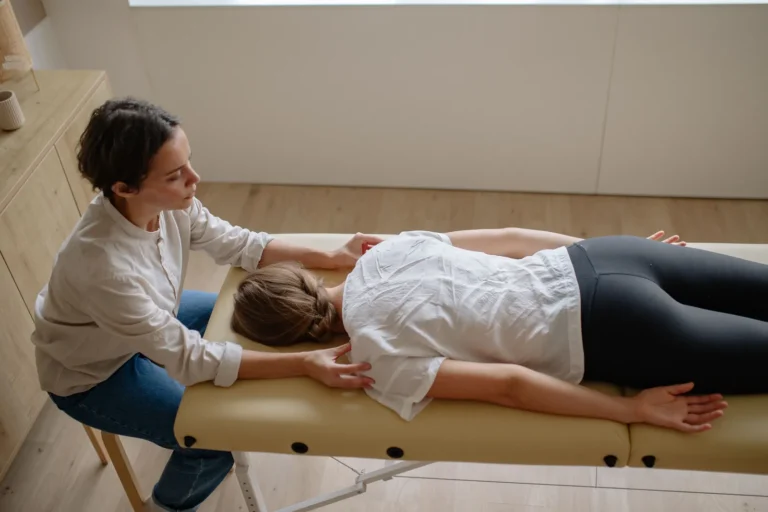
At HealthSource of Roseland, Dr. Jenna Patel, D.C., starts by finding out where your pain is likely coming from. First, you fill out a health history and talk with her about how the pain began. Next, she checks your posture, mobility and pain. We take X-rays on site only if they are clinically needed. Then she explains her findings and a care plan before any care starts.
Chiropractic care is not the right first step for pain from the heart, lungs or other organs. That is why the red flags come first. When the source is your muscles, joints or neck, Dr. Patel looks for the cause, not only the symptoms. Your plan may include hands-on adjustments, soft tissue work and exercise rehab, plus nutrition and lifestyle guidance.
For neck pain, NCCIH reports that spinal manipulation may help, though the evidence is of low to moderate quality. It is often paired with exercise as part of a wider plan. Mild soreness or stiffness after an adjustment usually fades within a day. Neck manipulation has been linked to rare tears in neck arteries that can lead to a stroke, but experts disagree about whether it causes them.
Care may help ease pain, although results vary from person to person. Dr. Patel rechecks your progress, and if you are not improving, we change course. She explains everything in plain words, in English, Hindi or Gujarati. You can also read about our care for shoulder and arm pain and neck pain relief in Roseland.
A calm next step
If the ache between your shoulder blades has lasted more than a week, or it keeps coming back, you do not have to guess. Book a visit online or call (973) 200-2424. Ask about our new-patient visit: consultation, exam and X-rays if clinically needed. The offer is for new patients only. It does not apply to Medicare, Medicaid, other federal healthcare program patients or ACN members.
This article is for education only and is not a diagnosis. If you have any of the red flags above, call 911 or see a medical doctor first.