A tension headache usually feels like a dull, steady squeeze or a tight band around your head. A migraine is more often a throbbing pain on one side, and it may bring nausea or make light and sound hard to bear. So the short answer to tension headache versus migraine comes down to how the pain feels, where it sits and what comes with it. Because the two can overlap, a pattern over several headaches tells you more than one bad day. Knowing which one you likely have helps you choose what to try first and when to call a doctor.

Tension headache versus migraine at a glance
Both are primary headaches. That means the headache is the problem itself, rather than a sign of another illness. Here is how the two usually compare:
| Tension headache | Migraine | |
|---|---|---|
| How it feels | Dull pressure or a tight band, not throbbing | Throbbing or pulsing |
| Where you feel it | Both sides, often the forehead, temples or back of the head | Often one side of the head |
| How strong | Mild to moderate | Moderate to severe |
| Nausea or vomiting | Usually none | Can happen |
| Light and sound | Maybe one of them, not both | Often bothered by light and sound |
| Aura before the pain | No | Some people |
| Walking or climbing stairs | Does not usually make it worse | Can make it worse |
Treat this table as a guide, not a diagnosis. Tension headaches can also show up alongside a migraine, so you may notice features of both.
What a tension headache feels like
Tension headaches are the most common type of headache. Many people describe a dull, steady pressure, like a tight band or a vise around the head. You may feel it across your forehead, at your temples, or at the back of your head and neck. Your scalp, neck and shoulder muscles may feel tight or achy, too.
According to the National Institute of Neurological Disorders and Stroke, an episode can last from about 30 minutes to 7 days. Some people get them now and then, while others get them on most days. Light activity, such as walking or climbing stairs, does not usually make the pain worse.
What a migraine feels like
A migraine is a neurological condition with repeated attacks, not just a bad headache. The pain is moderate to severe, and it often throbs or pulses on one side of the head. During an attack, you may feel sick to your stomach. Light and sound can also feel like too much. Unlike a tension headache, a migraine can get worse with routine activity, even a walk up the stairs.
Some people notice changes in their vision before the pain starts. Doctors call this an aura, and not everyone with migraine gets one. Migraine affects both children and adults, and it is more common in women than in men.
Common triggers for each
Tension headaches often build when muscles in the neck, scalp and jaw stay tight. Common triggers include:
- Stress, worry or a long, busy week
- Holding your head in one position for hours, such as when typing
- Poor sleep, or too little of it
- Eye strain from screens or glare
- Clenching your jaw or grinding your teeth
- Alcohol, too much caffeine, or skipping your usual caffeine
Migraine attacks have their own list of triggers. Emotional stress, weather changes and shifts in your eating or sleep schedule are common ones. Some people also react to certain foods and drinks, such as aged cheese, chocolate, processed meats, alcohol or caffeine. In addition, not drinking enough water can set off either type.
Because the lists overlap, triggers alone cannot tell the two apart, but they do point to habits worth changing. If you sit at a laptop all day, as many people along Eisenhower Parkway do, our post on tech neck has simple desk changes to try.
When the headache starts in your neck
A third type is easy to mix up with both. A cervicogenic headache comes from a problem in the neck, such as arthritis, a pinched nerve or a whiplash injury. The pain usually sits on one side. It may begin at the base of the skull and spread toward the front of the head. Turning your neck may make it worse, and your neck may not move as far as it used to.
Since the pain is one-sided, it can feel like a migraine, but usually without the nausea or the light and sound sensitivity. Our post on headache at the base of the skull covers this pattern in more detail. If your headaches began after a car accident, read about delayed whiplash symptoms, since symptoms can start hours after a crash. If the ache settles lower, see our guide to pain between the shoulder blades.
Tension headache versus migraine: keep a headache diary
For the tension headache versus migraine question, a simple diary often settles more than memory can. After each headache, jot down:
- The time it started, how strong it felt and how long it lasted
- Any sensitivity to light, sound or smells
- What you were doing, eating and drinking beforehand
- Every medicine you took, including over-the-counter ones
- How well you slept the night before
After a few weeks, patterns may start to show. For example, one-sided throbbing pain with nausea leans toward migraine. A squeezing ache at the end of long screen days leans toward a tension headache. Either way, bring the diary to your medical doctor or to us.
What may help with tension headache versus migraine
For an occasional tension headache, over-the-counter pain relievers may help. Stress management, regular exercise, good sleep, massage and warm or cold packs may help too. Be careful with pain medicine, though. Taking it more than three days a week can lead to rebound headaches, which are hard to treat.
For migraine, a medical doctor can prescribe medicines to stop attacks or help prevent them. Please talk to your doctor before you stop or change a prescribed medicine.
So where does chiropractic care fit? The honest answer is that research is mixed. The National Center for Complementary and Integrative Health notes that studies of spinal manipulation for headaches have had conflicting results. Hands-on care may help some neck-related headaches. However, the evidence that adjustments help tension headache and migraine is limited. Side effects can include a short-lived headache or tiredness. Rarely, people have had strokes after neck manipulation, although research has not shown that the adjustment caused them.
When to see a doctor or go to the ER
Most tension headaches are not dangerous. Still, some headaches need medical care right away. Call 911 or go to the ER if a headache:
- Starts suddenly and feels explosive, or is the worst of your life
- Comes with weakness, numbness, slurred speech, vision changes, confusion or loss of balance
- Arrives with a fever and a stiff neck
- Follows a head injury, such as a blow to the head
- Is severe and centered in one eye, and that eye is red
- Begins as a new pattern after age 50
Also see a medical doctor soon if headaches wake you from sleep, last more than a few days or change their usual pattern. The same goes if you need pain medicine more than three days a week. MedlinePlus lists more headache danger signs worth knowing. This post is educational and is not a diagnosis.
How we approach it at HealthSource of Roseland
At our Roseland office, Dr. Jenna Patel, D.C. evaluates you before any care starts. Your first visit includes a health history questionnaire, a consultation and an exam of your posture, mobility and pain. We take X-rays only if clinically needed. Then Dr. Patel explains her findings and a personalized care plan.
She looks for the source of the problem, not only the symptoms. With headaches, she checks how your neck moves, how you sit and where your muscles feel tight. That exam helps with the tension headache versus migraine question, because it shows if your neck and posture play a part.
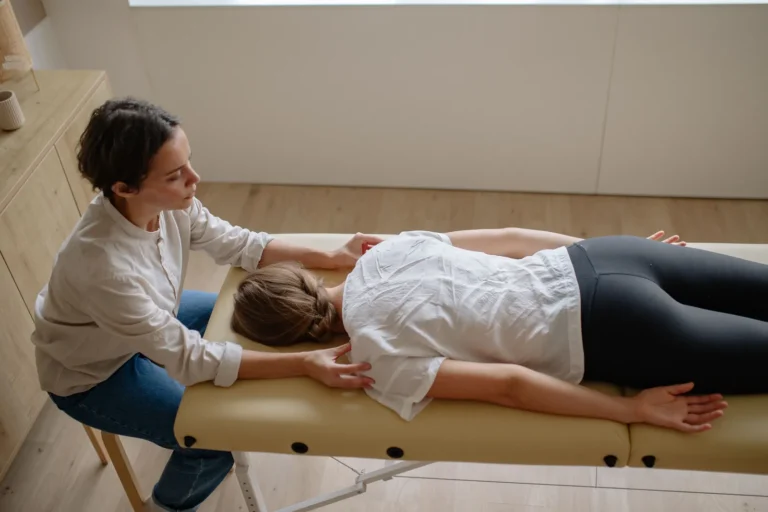
If your exam points to the neck or posture, your plan may include hands-on adjustments, soft tissue work and Progressive Rehab® and functional exercise. She also holds an M.S. in Applied Clinical Nutrition, so she can help with meals, water and sleep habits. Our care does not treat migraine itself. If your symptoms sound like migraine or anything else that needs a medical doctor, we will tell you. Learn more on our headache and migraine relief page.
If headaches keep pulling you away from work or sleep, you do not have to sort them out alone. Bring your diary, then book a visit online or call (973) 200-2424. Dr. Patel speaks English, Hindi and Gujarati. Ask about our new-patient visit: consultation, exam and X-rays if clinically needed. The offer is for new patients only. It does not apply to Medicare, Medicaid, other federal healthcare program patients or ACN members.